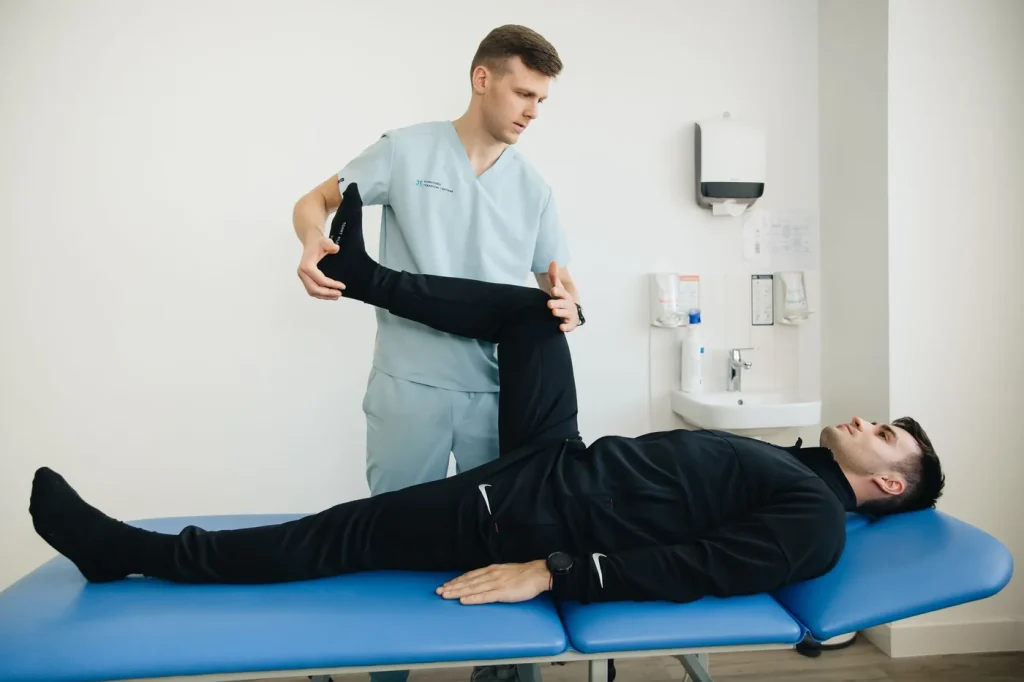
Knee Pain on Stairs: Why Strength and Load Matter
Why stairs often expose knee problems, what “load tolerance” means, and how strengthening can make climbing, squatting and daily movement easier.
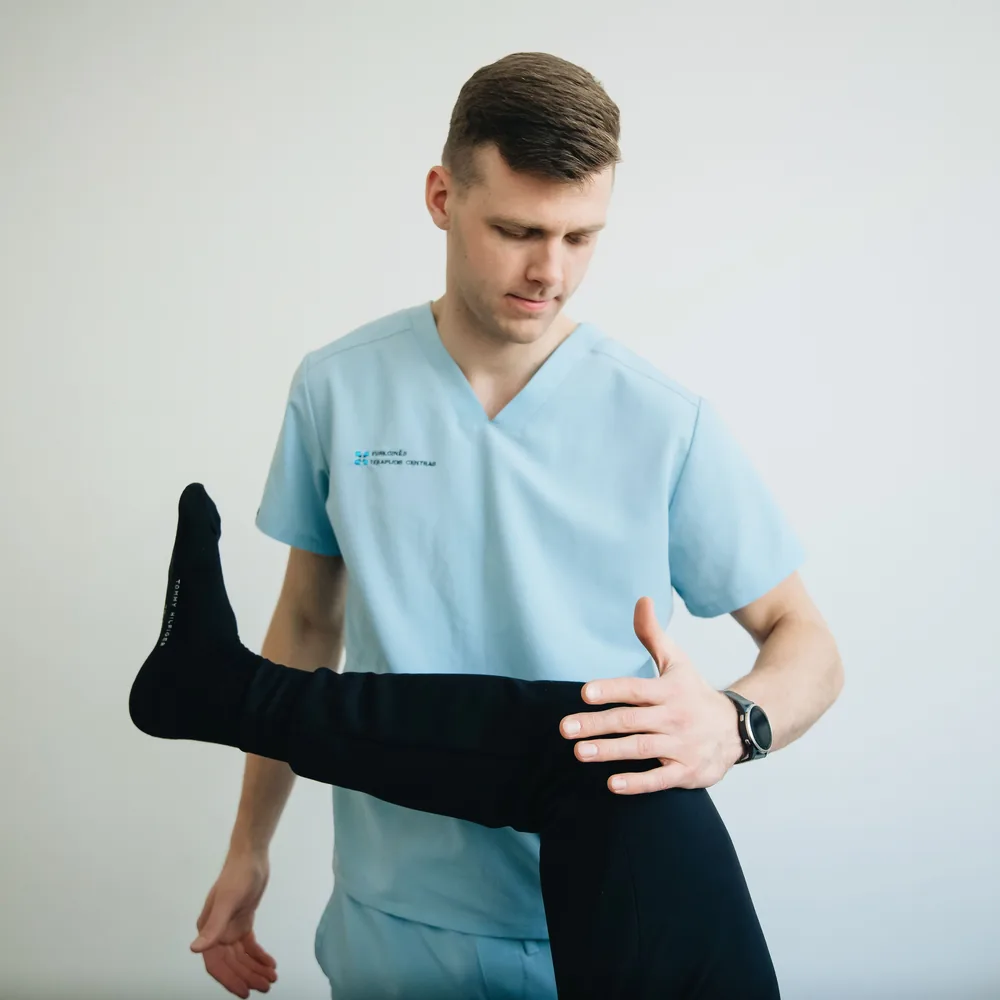
Knee pain often feels strangely selective. Walking on level ground may be manageable, then a flight of stairs suddenly makes the knee feel weak, sharp or heavy. That happens because stairs ask much more from the knee and surrounding muscles than ordinary walking.
The knee has to control your body weight while the hip, thigh and calf muscles coordinate the movement. If the joint is irritated or the muscles have lost strength after injury, inactivity or surgery, stairs can expose the gap quickly.
Think in terms of capacity, not a “bad knee”
One helpful rehabilitation idea is load tolerance. Your knee has a current capacity for activity. Daily life places demands on it. Pain often becomes more troublesome when the demand repeatedly exceeds the capacity.
The solution is not always to remove demand permanently. It is often to gradually increase capacity. That may include quadriceps strengthening, hip strengthening, calf work, balance training and practice with the exact tasks that trouble you.
Osteoarthritis does not mean you should stop moving
In 2019, the World Health Organization estimated that around 528 million people were living with osteoarthritis worldwide, with the knee the most commonly affected joint. Exercise and physical activity remain important parts of management for many people with osteoarthritis.
The CDC recommends joint-friendly activities such as walking, cycling, swimming and tai chi. The useful choice is the activity you can tolerate and repeat, not the one that sounds most impressive.
A simple stair-focused progression
- Start with sit-to-stands. Use a chair height that allows good control. Add repetitions before lowering the chair or adding load.
- Practice step-ups. Begin with a low step and a hand support if needed.
- Add slow lowering. Stepping down under control is often harder than stepping up and is useful for building eccentric strength.
- Progress the real task. Increase step height, repetitions or carried load gradually.
If the knee becomes mildly sore during the session but settles quickly, that may be an acceptable training response for some conditions. A large swelling increase, persistent giving way, locking, or a dramatic worsening that does not settle deserves clinical review.
Do not judge progress only by pain
Useful signs of improvement include needing less support on stairs, controlling the lowering phase better, completing more repetitions, walking farther, or getting out of a chair more easily. Pain can fluctuate even while function improves.
Bottom line: the goal is not simply to protect the knee from every load. It is to help the knee and the rest of the leg become capable of handling the loads your life requires.
What this can look like in a normal week
Imagine that you can climb one flight of stairs, but the knee aches later that evening. Instead of avoiding stairs completely, you might keep normal essential stair use, add two short strengthening sessions during the week, and use a lower step for practice. If the knee settles well, you can gradually increase step height, repetitions or resistance.
That approach is less dramatic than trying a difficult workout once, but it gives the joint and muscles repeated opportunities to adapt. The same idea applies to carrying shopping, kneeling, getting up from the floor and walking on hills.
Swelling is useful information
People often focus only on pain, but swelling can tell you how the knee is responding to load. A knee that becomes substantially more swollen after every session may need a lower dose or a different exercise choice. A clinician can also check for causes that need specific treatment, especially after a recent injury.
Keep a simple note for one or two weeks: what you did, how the knee felt later that day, how it felt the next morning, and whether swelling changed. That is often more useful than trying to remember whether Tuesday felt “good” or “bad”.
Further reading
This article is general health education, not a diagnosis or a substitute for an individual clinical assessment. Seek urgent medical care for severe or rapidly worsening symptoms, major trauma, new weakness or numbness, loss of bladder or bowel control, chest pain, breathing difficulty, or other emergency symptoms.